
Uses for Behavior Profiling
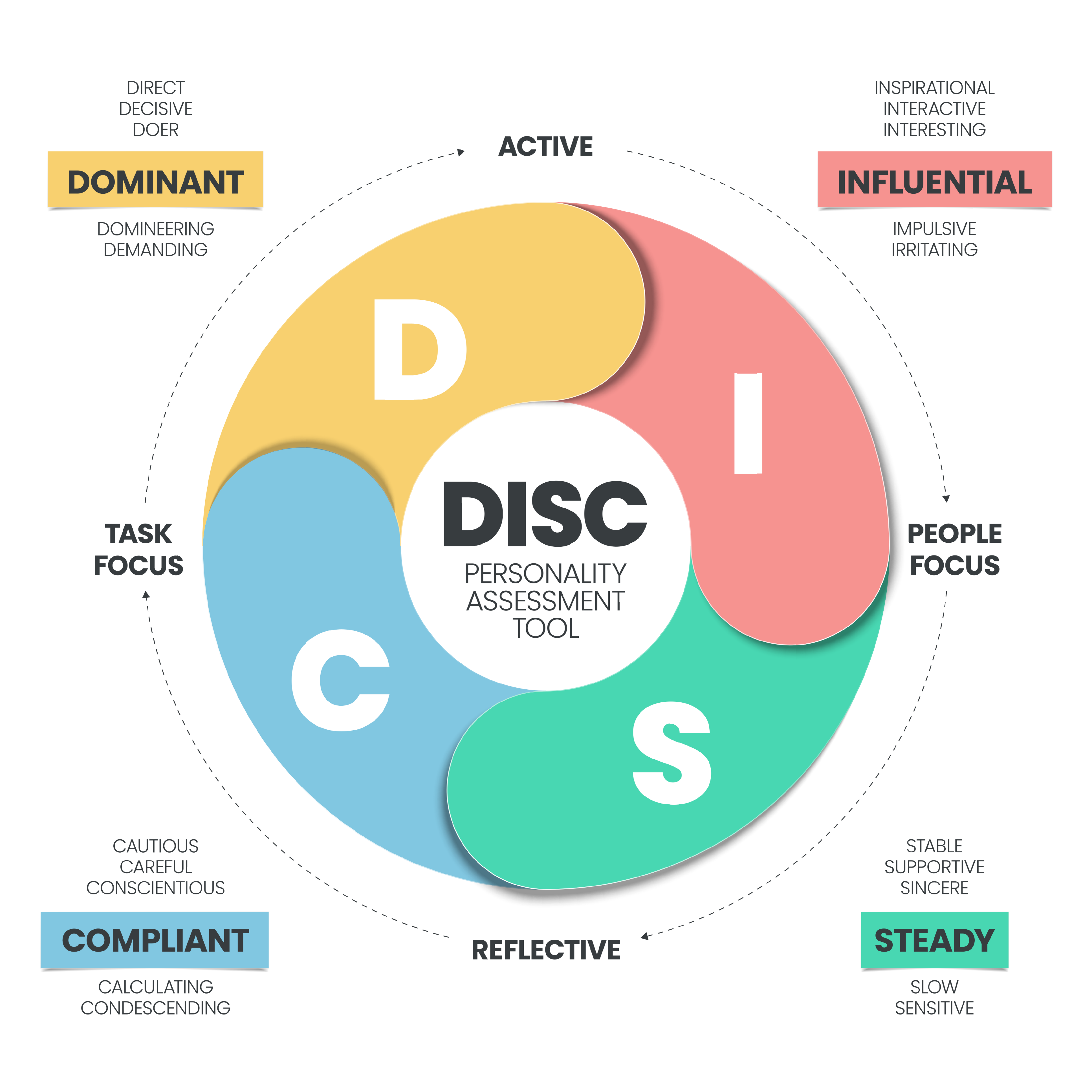
Over the past several months, I’ve spent a lot of time presenting and teaching on the utility of behavior profiling for both coaches and athletes. It got me thinking, how many of you are familiar with the DISC behavior profile? If you’re familiar with it, are you truly using the results to inform your coaching? DISC theory evolved through psychologist, Dr. William Marston’s, research (1928) on how emotions affect behavior and group interactions and was developed into an assessment by Clarke (1956) and ultimately refined by Geier (1979). Over the years, the DISC assessment has been modified slightly (but never copyrighted) for use primarily in leadership and organizational psychology. Over the past two decades, other professions have discovered the benefits of DISC behavior profiling including the sports field. Athlete Assessments provides a version of DISC for sport managers, coaches, and athletes (Athlete Assessments, 2026).
So, what can DISC do for you? The primary goal of DISC is to create a self-awareness. Interestingly, research has shown that globally, people tend to exhibit behaviors consistent with four primary profiles (dominance, influence, steadiness, conscientiousness) (Athlete Assessments, 2026). While we all exhibit a combination of these profiles, most of us exhibit behaviors more so in 1 to 2 profiles more often than others. The key word here is “behaviors.” DISC is not a personality assessment but a behavior assessment. Behaviors are observable to others and tend to be more consistent than personality factors. A Sport DISC assessment gives you an idea of the behaviors others most often experience from you when you are in a comfortable, natural state and how you adapt behaviors in your sport role (e.g., behaviors when coaching, playing). One notable benefit of DISC profiling is it can help improve the coach-athlete relationship & team culture which is a key factor in athlete and team success (Werthner, 2009)
Once you have your results, you think more deeply about how you are adapting in situations and to others (or not adapting) and if those behaviors are working for you. You can become more familiar with others’ possible profiles and learn how you can adapt to them and/or teach them how to adapt and flex more effectively. Your entire team or staff can take a DISC and receive summaries of your profiles, collaboration reports (especially helpful with key positions that need to work well together), and a team/staff overview of all the profiles involved. You can work with your staff to build benchmark profiles for future staff lines or recruits to give you an idea of the type of profiles that would work well with your current profiles. There is much more to DISC and so much you can do! If you’re interested in purchasing a Sport DISC, reach out to me at m.buning@fsu.edu! I am certified to issue the Sport DISC and work with you on how to best use the results.
References
Athlete Assessments. (2026). DISC profiling in sport. Retrieved from https://www.athleteassessments.com/services/disc-profiles-sport/
Clarke, W. V. (1956). Manual for the activity vector analysis. Providence, RI: Walter V. Clarke Associates, 3, 295-302.
Geier , J. G. 1979 . Introduction. In Emotions of normal people , Marston , W. M. (Ed.)(pp. i – xxxii . Minneapolis : Persona Press.
Werthner, P. (2009). Building an effective coach-athlete relationship: Perspectives from great female athletes. Canadian Journal for Women in Coaching, 9(4), 1-7.